

Tummy Time to Tracking Toys: How Your Baby’s Vision Develops in Their First Year (and When to Schedule an InfantSEE® Exam)
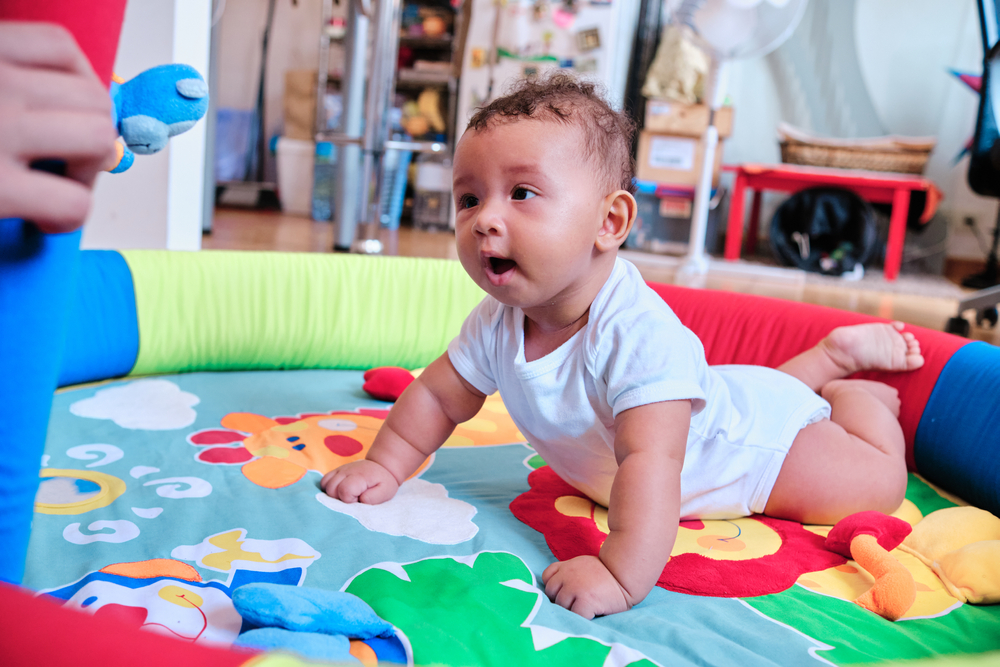
Vision unfolds quietly in that first year after a child is born. It is not just about seeing clearly. It is about learning to focus, track, and make sense of the world. When you understand what comes next, you can tell when something might need attention.
The First Few Months: Faces and Fuzzy Shapes
Newborns see best from about eight to ten inches away. That is just far enough to study your face while they nurse or feed. Everything beyond that is a blur. They are drawn to high contrast. Black and white patterns. The edge of a window frame. Your hairline.
During tummy time, their neck and shoulder muscles get stronger. That physical strength is tied to vision, because babies need to lift their heads to look around. At first, their eyes may drift or cross. That is normal. But if one eye turns in or out all the time, it is worth mentioning to your pediatrician.
The Middle Months: Reaching and Tracking
When your baby is four to six months old, he or she will start reaching for things to grab them. They will reach for your hair, your glasses, and even the dog’s ear. Their eyes lock onto a moving toy and track it smoothly. Color vision wakes up too. Reds and yellows start to stand out. The world is getting more interesting every day.
At this age, babies start to coordinate what they see with how they move, like reaching for and touching mobiles. They also begin to recognize familiar faces from farther away, not just up close.
The Later Months: Depth and Detail
Somewhere around ten months, your baby will turn into a tiny detective. They should be able to see even a single cheerio on the highchair tray. And after seeing it, they will attempt to grab it. That grasp comes right as their depth perception kicks in. You will see them slow down at the edge of a bed. Peer over. Pull back. That is their vision protecting them.
Your baby also starts to understand what they see. If a ball rolls behind a chair, they will look for it, remembering where it went. This is the beginning of visual memory, a skill that will help them with reading and learning later on.
When to Schedule an Eye Exam
The American Optometric Association suggests scheduling your baby’s first full eye exam between six and twelve months old. This is different from the quick vision check at the pediatrician’s office. The exam looks at how your baby’s eyes focus, move, and work as a team.
Many parents are surprised to learn that this exam can be free. The InfantSEE program offers a no-cost eye check for babies in this age group, no matter your income or insurance. Participating doctors look for problems such as strabismus, amblyopia, and high refractive error, which are easier to treat when found early.
What the Doctor Looks for
During the exam, the doctor will see how your baby’s eyes follow a light or toy. They use special tools to measure focus, so your baby does not need to speak. The doctor also checks the shape of the eyes and how they line up. The visit is gentle and calm for your baby.
A Simple Step Early On
You are already helping your baby’s vision grow by doing tummy time, talking face-to-face, and giving them toys to reach for and follow. An InfantSEE exam adds another level of care, finding any problems early while your baby’s eyes are still developing and respond best to treatment.
The first year goes by quickly. Before you know it, your baby is grabbing their toes or pointing at birds in the sky. A simple eye exam can help keep their vision healthy as they discover new things.
To learn more about your baby’s vision development, visit Sight To See Eyecare & Eyewear in Geneva, Illinois. Call (331) 267-7500 to schedule an appointment.
https://www.aao.org/eye-health/tips-prevention/baby-vision-development-first-year
https://www.aoa.org/healthy-eyes/eye-health-for-life/infant-vision


MAP
CONTACT INFORMATION
HOURS OF OPERATION
Monday 10:30am - 7:00pm
Tuesday 8:00am - 5:00pm
Wednesday 8:00am - 5:00pm
Thursday 8:00am - 5:00pm
Friday 8:00am - 2:00pm
Saturday Closed
Sunday Closed

Powered by: 
