
Clearing the Fog Around Cataracts
Imagine this scenario: you wake up, look at your clock, and you're late for school or work. You jump up, throw on clothes, brush your teeth, and run to your car. You turn it on and are ready to speed to work, but your window is fogged up and/or has frost on it, and you can’t see through it! Here in Chicagoland, we’ve all been through this at least once before. Well, looking through that foggy window is similar to how cataracts can affect your eyesight.
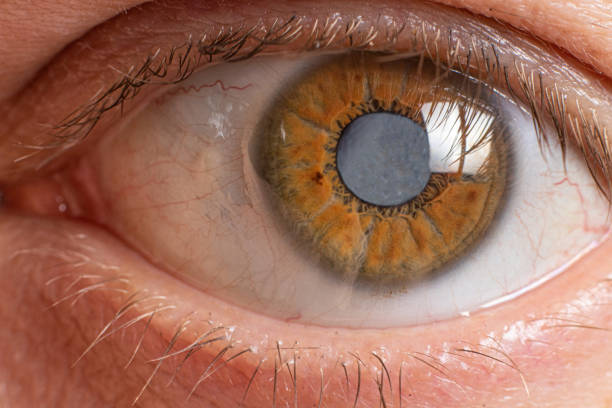
Cataracts are normal; everybody will get cataracts. They are typically not a disease, but instead is a normal aging condition that develops gradually over time, causing clouding of the lens and leading to vision impairment. However, the good news is that effective treatment options are available to help you restore clear vision. In this blog post, we will introduce and explain cataracts, delve into their causes and symptoms, and explore the various treatment options to help you regain visual clarity.
Understanding Cataracts
Cataracts are one of the top two reversible causes of blindness in the world, with the other cause being uncorrected refractive error. It refers to the gradual clouding of the natural lens of the eye, which is typically clear and transparent. This clouding occurs due to the breakdown of the proteins in the lens, causing the lens to become opaque. As a result, the passage of light through the lens is obstructed, leading to blurry or distorted vision.
Causes and Symptoms
Cataracts primarily develop as a natural part of the aging process. However, other factors such as prolonged sun exposure, smoking, certain medications, diabetes, trauma, and genetic predisposition can also contribute to their formation. Symptoms of cataracts may include:
Blurry or hazy vision: Objects may appear less sharp, and your overall vision may seem foggy or cloudy.
Sensitivity to light: You may experience increased sensitivity to bright lights or glare, especially during activities such as driving at night.
Difficulty with contrast: Distinguishing between shades of colors or seeing contrast between objects may become challenging.
Poor night vision: Vision in low-light conditions may be impaired, making it harder to navigate in dimly lit environments.


MAP
CONTACT INFORMATION
HOURS OF OPERATION
Monday 10:30am - 7:00pm
Tuesday 8:00am - 5:00pm
Wednesday 8:00am - 5:00pm
Thursday 8:00am - 5:00pm
Friday 8:00am - 2:00pm
Saturday Closed
Sunday Closed

Powered by: 
